Meet our new SAMRC-funded member projects
Project PIs Dr Fortunate Mokoena and Dr Rose Hayeshi give us an overview of their AMR-focused projects.
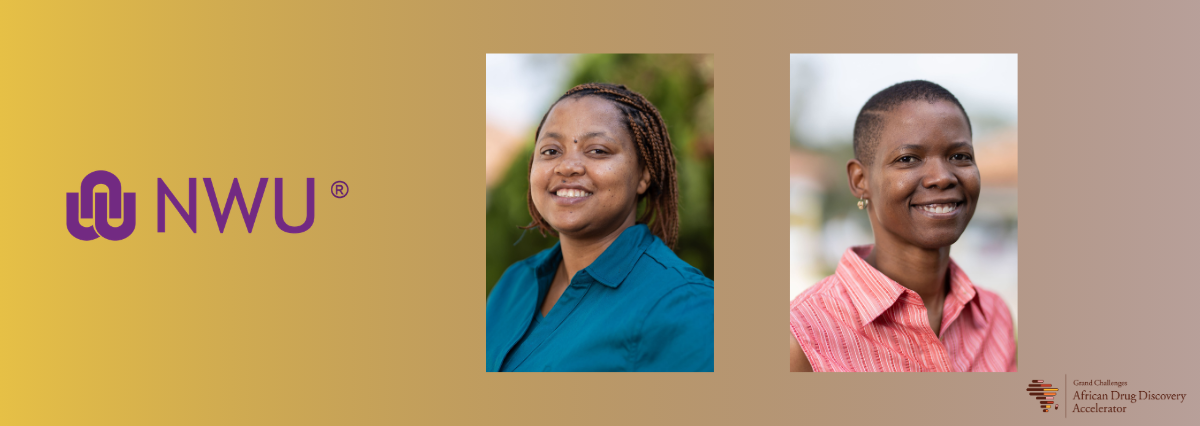
Earlier this year, the South African Medical Research Council (SAMRC) committed R6 million in funding to support two early-stage drug discovery research platforms under the GC ADDA banner.
Both projects are hosted by North-West University (NWU) in Potchefstroom, South Africa and are aimed at strengthening early-stage Gram-negative antibiotic discovery and toxicology capability within the GC ADDA research pipeline. The grants were awarded to projects led by Dr Fortunate Mokoena and Dr Rose Hayeshi, both emerging African women principal investigators and GC ADDA Full Members, underscoring a commitment to advancing women’s leadership in science, strengthening early-career research capacity, and promoting inclusive participation in biomedical research
Building Toxicology Capability to support GC ADDA Flagship projects is led by Dr Rose Hayeshi, director of NWU's Preclinical Drug Development Platform (PCDDP) and Identification and Characterization of Hits Against Carbapenem-Resistant Klebsiella pneumoniae is led by Dr Fortunate Mokoena, senior lecturer in NWU's Department of Biochemistry.
We reached out to Fortunate and Rose with a set of questions to find out more about their projects:
Can you provide a brief overview of your GC ADDA, SAMRC-funded project and the problem it aims to address?
FM: This project addresses the growing global threat of antimicrobial resistance (AMR), where disease-causing microorganisms are becoming increasingly able to resist treatment with currently available antibiotics. As a result, infections are becoming more difficult to treat, highlighting the urgent need for new and effective antimicrobial therapies. We propose a drug repurposing approach that utilises FDA-approved drugs, which have already undergone extensive safety and efficacy testing. This strategy aims to accelerate the development process and improve the likelihood of successful treatment options for resistant infections.
RH: The project aims to build toxicology capability to support GC ADDA Flagship projects. The project will address a critical gap in toxicology capability and expertise within GC ADDA through targeted training, expert advisory support, and structured knowledge exchange. The project is designed to enable the practical integration of early investigational toxicology assessments into ongoing GC ADDA projects while laying the foundation for sustained toxicology capability across participating African institutions.
Why is this kind of work so crucial in the fight against AMR, particularly in the African context?
FM: In 2019, the World Health Organization reported that AMR caused approximately 1.27 million deaths globally, with Sub-Saharan Africa being the most affected region. South Africa specifically recorded about 35,000 deaths due to AMR in 2021. The rampant use of antibiotics, particularly in intensive care units across both public and private healthcare sectors, has intensified the problem of drug resistance. Notable pathogens contributing to this crisis include Klebsiella pneumoniae, Acinetobacter baumannii, and Candida auris. The effectiveness of carbapenems, often reserved as a last resort for treating severe bacterial infections, is diminishing. To address this urgent issue, our research focuses on developing new therapeutic strategies targeting carbapenem-resistant Klebsiella pneumoniae, a highly prevalent and significant clinical threat in South Africa.
RH: Toxicology, the study of potential harm caused by substances, is essential to evaluating whether candidate drugs are safe enough to proceed to clinical trials and is a major cause of failure of new drug molecules making it to the market. Toxicology is a critical component of drug discovery, enabling early risk identification, compound triage, and informed project decision‑making. Therefore, this work is critical in the fight against AMR, as it will directly influence the progression and quality of candidate compounds in the development of drugs to combat AMR.
What kind of capacity-strengthening opportunities will come out of your project? And what does this mean for building sustainable drug discovery capacity in Africa?
FM: This funding significantly strengthens capacity development in Africa by supporting the training of a PhD candidate, an MSc student, and a post-doctoral fellow who will also help mentor junior scientists. It enhances collaboration with the University of Cape Town and H3D, where Co-PI Dr Drik Lamprecht will provide advanced training in key areas such as broad-spectrum activity profiling and CRISPR-Cas target validation.
We hope that this project will also benefit from engagement with GC ADDA training opportunities, helping to build a stronger network and a critical mass of skilled drug discovery scientists across Africa.
RH: The project will train 1-2 trainees, the main one being an emerging researcher with post-PhD experience. GC ADDA team members from the DMPK flagship project will also have the opportunity to take part in training. As Africa moves towards securing its ability to develop drugs from bench to bedside, it is vital to strengthen the skills in toxicology that will be necessary to support this critical endeavour.
Both projects are led by women. Why is this significant in terms of a scientific community where we are still striving for gender parity?
FM: This is a significant milestone in the quest for gender parity in science. This funding underscores SAMRC's commendable commitment to recognising and empowering women as leaders in scientific innovation and capacity building.
This initiative sends a powerful message to the entire research ecosystem: visible female leadership is essential in challenging entrenched structural barriers and serves as an inspiration for early-career researchers. We hope that the STEM community will intensify efforts to foster inclusivity and fortify the pipeline for women in STEM fields. Especially in Africa, where such representation is not just beneficial but essential for sustainable transformation.
RH: It is a reflection of the reality that there are many highly skilled women scientists on the continent, conducting impactful research, a fact that is sometimes overlooked.
What are the benefits of working within a network such as GC ADDA, particularly for advancing drug discovery on the continent?
FM: The GC ADDA network is a powerful collaborative platform that values the diverse and passionate African scientists committed to advancing drug discovery. Being part of this dynamic group is both a privilege and an opportunity to contribute to a shared vision of improving health outcomes across the African continent. By promoting collaboration and using collective expertise, GCADDA enables scientists to exchange knowledge, enhance research capacity, and accelerate the development of innovative solutions. We aim to access the network's resources to help discover life-saving antimicrobial agents specifically tailored to address the diseases most relevant to Africa, ensuring that these solutions are locally driven and globally impactful.
RH: The GC ADDA network is made up of institutions with drug discovery expertise spanning the African continent. Working within such a network of like‑minded, skilled partners allows us to combine strengths, share resources, and tackle complex drug discovery challenges that no single institution can address in isolation. This collaborative approach is essential for advancing locally relevant, globally competitive drug discovery in Africa.
What would you like to see from African governments and institutions to better support drug discovery and innovation on the continent?
FM: As a proud South African, my heart waved rainbow colours inspired by the SAMRC initiative to enhance drug discovery across Africa. This highlights a broader commitment from the South African government to advancing health innovation on the continent.
Through the GCADDA network, I've worked alongside some of the dedicated scientists from other African nations. Their expertise is immense, but sustained support is crucial to unlocking their full potential.
By investing in scientific capacity, strengthening infrastructure, and fostering collaborative networks, our African countries can unite toward a common goal and drive significant progress. This is a pivotal moment for Africa to showcase its increasing influence in science and innovation through partnerships and locally relevant solutions with global impact.
RH: Beyond funding, I would like to see both governments and institutions engaging at a systems level, for example investment in shared infrastructure and resolution of procurement bottlenecks. I would like to see a move towards a functioning, connected ecosystem across the continent.